Breadth-First Search (BFS) in JS: Unlock the Power of Graphs
Breadth-First Search (BFS) is implemented in JavaScript to traverse a graph. In this algorithm, the nodes at the same level are visited before moving on to the next level.
In BFS, the search begins at the root node and explores all the neighbor nodes before proceeding to the next level. This implementation ensures that the algorithm visits all the nodes at the current level before moving deeper into the graph.
By utilizing a queue data structure, BFS keeps track of the nodes to be visited, ensuring that the algorithm visits each node only once. This approach makes BFS suitable for finding the shortest path between two nodes in an unweighted graph. Implementing BFS in JavaScript allows for efficient graph traversal and can be applied to various scenarios, such as finding connected components or solving puzzles with multiple steps.
Introduction To Breadth-first Search
Breadth-First Search (BFS) is a popular algorithm used to traverse or search through a graph or tree. In this blog post, we will explore the implementation of BFS using JavaScript, providing a step-by-step guide for easy understanding and practical application.
Breadth-First Search (BFS) is a fundamental algorithm used for traversing or searching tree or graph data structures. It explores all the vertices of a graph in breadth-first order, meaning it visits all the vertices at the same depth before moving on to vertices at the next depth level. This algorithm uses a queue data structure to keep track of the vertices to be visited next.Core Concepts Of Bfs
BFS operates on the principle of exploring a graph layer by layer. The algorithm starts at a given vertex, typically referred to as the root, and systematically visits all the vertices connected to it before moving on to the next level. The core concepts of BFS include: 1. Queue: BFS uses a queue to store the vertices that need to be visited. The queue follows the First-In-First-Out (FIFO) principle, where vertices are added at the end of the queue and removed from the front. 2. Visited Array: To ensure that each vertex is visited only once, BFS maintains a visited array. This array keeps track of the vertices that have been visited or explored. 3. Adjacency List: BFS relies on an adjacency list to represent the connections between vertices in a graph. This data structure efficiently stores the neighbors of each vertex.Real-world Applications
BFS has various real-world applications due to its ability to systematically explore all vertices at the same depth level. Some common applications of BFS include: 1. Shortest Path: BFS can be used to find the shortest path between two vertices in an unweighted graph. By exploring vertices in breadth-first order, BFS guarantees finding the shortest path. 2. Web Crawling: Search engines often employ BFS to crawl and index web pages. The algorithm starts from a given web page and follows the links to other pages, systematically visiting them in breadth-first order. 3. Social Network Analysis: BFS is useful in analyzing social networks, such as finding the shortest path between two individuals or identifying communities within the network. 4. Puzzle Solving: BFS can be applied to solve puzzles that involve finding the shortest path, such as the "sliding puzzle" or the "8-puzzle". By understanding the core concepts of BFS and its real-world applications, we can leverage this algorithm to solve various graph-related problems efficiently.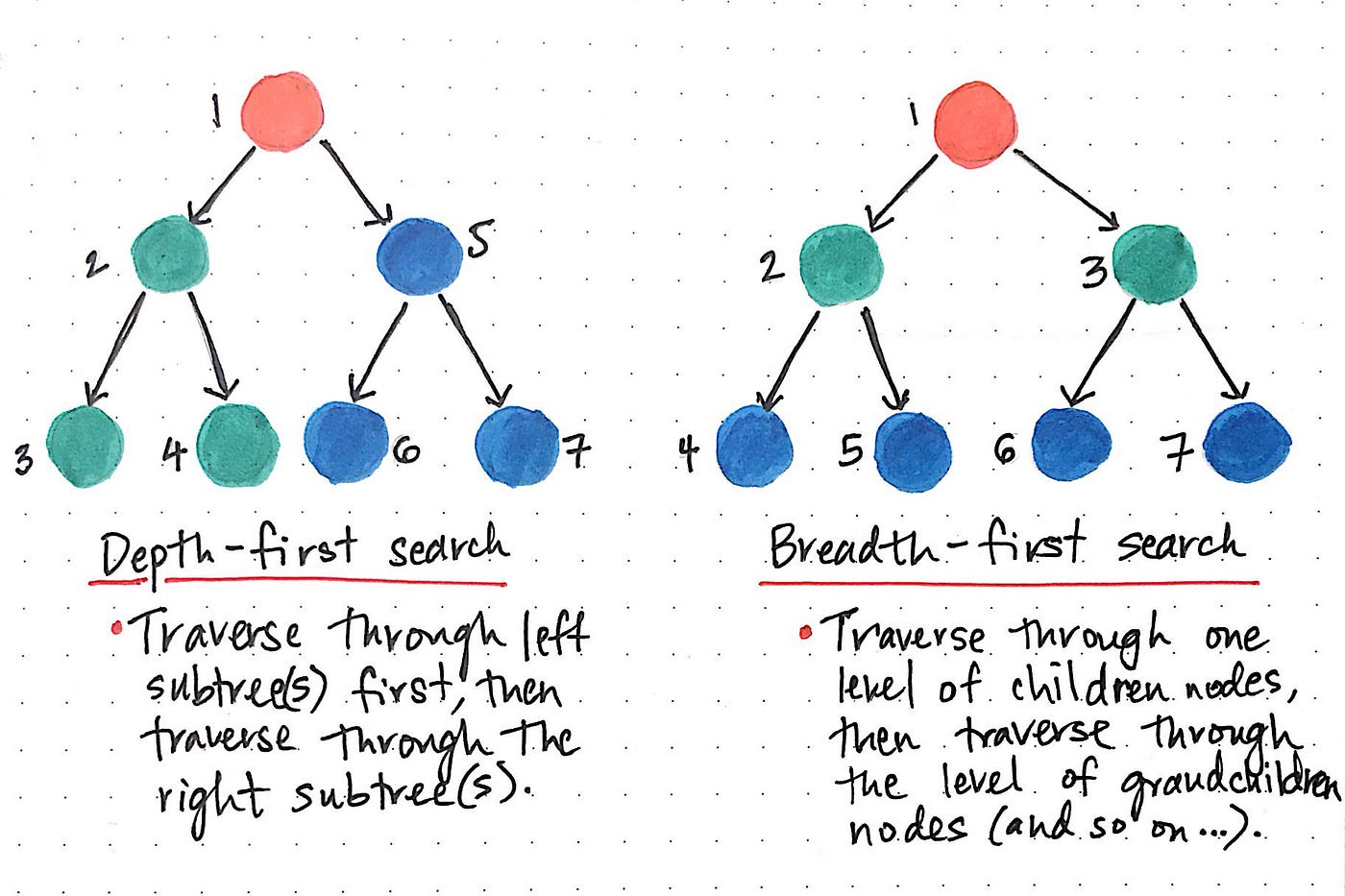
Credit: medium.com
Graph Basics For Bfs
Graph basics are essential for understanding the implementation of Breadth-First Search (BFS) in JavaScript. In graph theory, certain terminology and graph types lay the foundation for comprehending BFS and its application.
Terminology In Graph Theory
A graph consists of nodes (vertices) and edges that connect these nodes. Each edge represents a relationship between the connected nodes. The terminology used in graph theory includes:
- Node/Vertex: Individual data points within the graph
- Edge: Connection between two nodes, representing a relationship
- Directed Graph: Graph where edges have a specific direction
- Weighted Graph: Graph where edges have a weight/cost assigned to them
Types Of Graphs
Graphs can take various forms, each with its own characteristics. The main types of graphs include:
- Undirected Graph: Graph where edges have no specific direction
- Directed Graph: Graph where edges have a specific direction
- Weighted Graph: Graph where edges have a weight/cost assigned to them
- Connected Graph: Graph where there is a path between every pair of vertices
- Disconnected Graph: Graph where some vertices may not have a path to every other vertex
Implementing Graphs In Javascript
Implementing Graphs in JavaScript allows for efficient data representation and manipulation.
Data Structures For Graph Representation
Graphs can be represented in JavaScript using various data structures:
- Adjacency Matrix
- Adjacency List
- Edge List
Javascript Graph Libraries
Several libraries in JavaScript simplify graph implementation:
- Vis.js
- KeyLines
- AllegroGraph
The Algorithm Of Breadth-first Search
Explore the implementation of Breadth-First Search (BFS) in JavaScript through understanding the algorithm's step-by-step approach. With a focus on visiting nodes level by level, BFS efficiently finds the shortest path in graphs or trees, making it a valuable tool in various programming scenarios.
Breadth-First Search (BFS) is a graph traversal algorithm that explores all the vertices of a graph in breadth-first order, starting from a specified source vertex. It is commonly used to find the shortest path between two vertices in an unweighted graph.Step-by-step Bfs Process
The BFS algorithm can be broken down into the following steps:- Initialize an empty queue and a visited array to keep track of visited vertices.
- Enqueue the source vertex into the queue and mark it as visited.
- While the queue is not empty, dequeue a vertex.
- For each adjacent vertex of the dequeued vertex that has not been visited, enqueue it and mark it as visited.
- Repeat steps 3 and 4 until the queue is empty.
Pseudocode Overview
The pseudocode for implementing BFS in JavaScript can be outlined as follows:
function bfs(graph, source) {
    let queue = [];
    let visited = [];

    // Enqueue the source vertex and mark it as visited
    queue.push(source);
    visited[source] = true;

    while (queue.length !== 0) {
        // Dequeue a vertex
        let currentVertex = queue.shift();

        // Process the current vertex
        // ...

        // Enqueue adjacent vertices that have not been visited
        for (let neighbor of graph[currentVertex]) {
            if (!visited[neighbor]) {
                queue.push(neighbor);
                visited[neighbor] = true;
            }
        }
    }
}
Implementing the Breadth-First Search algorithm in JavaScript allows us to efficiently explore a graph and find the shortest path between two vertices. By following the step-by-step process and using the provided pseudocode, you can easily incorporate BFS into your own JavaScript projects.
Bfs In Javascript: A Detailed Guide
Discover a detailed guide to implementing Breadth-First Search (BFS) in JavaScript. Learn how to utilize BFS for efficient searching and traversing in JavaScript applications. Master the implementation process with clear examples and step-by-step explanations.
Breadth-First Search (BFS) is a popular algorithm used to traverse and discover nodes in a graph. It starts traversing the graph from the root node and visits all the nodes at the same level before moving on to the next level. This approach is useful in finding the shortest path between two nodes in an unweighted graph. In this article, we will discuss how to implement BFS in JavaScript. We will cover the following topics:Setting Up The Bfs Function
To implement BFS in JavaScript, we need to create a function that takes the graph and the starting node as input parameters. The function should initialize a queue to store the nodes that are yet to be visited. We will use an array to implement the queue. We will also initialize a visited object to keep track of the nodes that have already been visited.Traversal And Discovery Of Nodes
Once the queue and visited object are initialized, we can start traversing the graph. We will use a while loop to continue the traversal until the queue is empty. Inside the loop, we will dequeue a node from the queue and mark it as visited. We will then get all the adjacent nodes of the dequeued node and add them to the queue if they have not been visited yet. This process will continue until all the nodes in the graph have been visited.Code Implementation
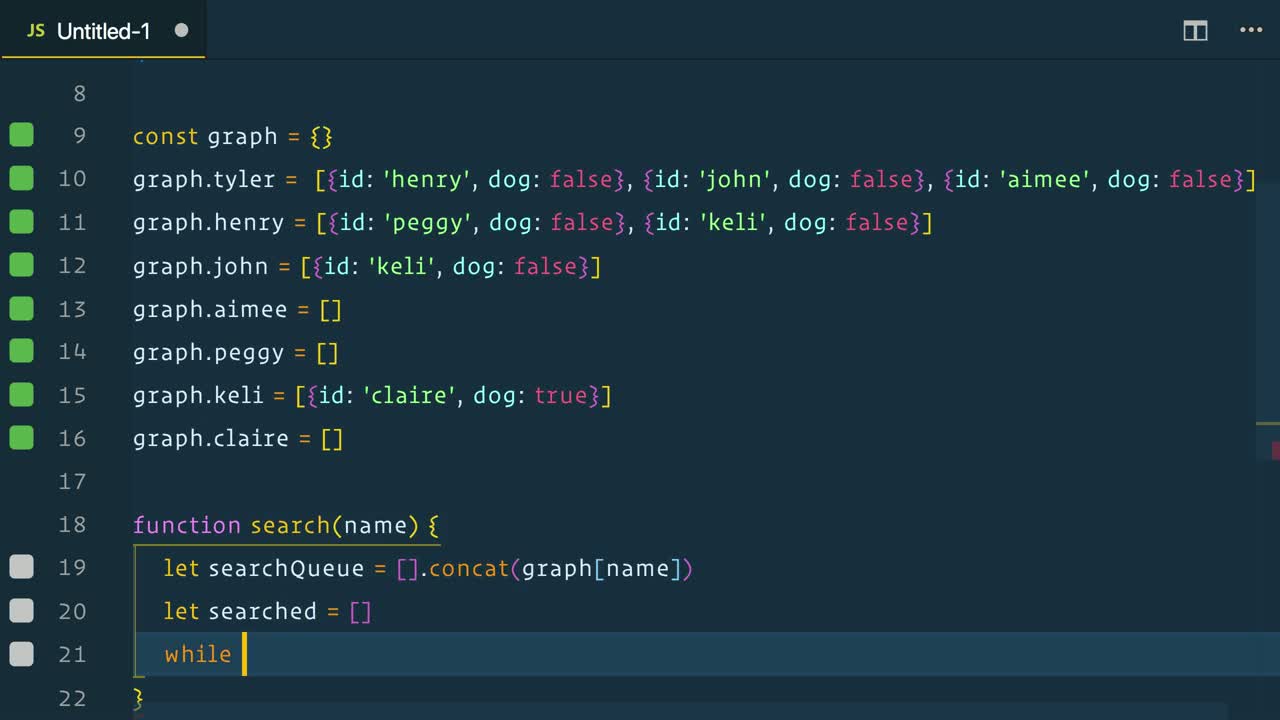
Here's the code implementation of BFS in JavaScript: ``` function bfs(graph, startNode) { let queue = [startNode]; let visited = {}; visited[startNode] = true; while (queue.length > 0) { let currentNode = queue.shift(); let neighbors = graph[currentNode]; for (let i = 0; i < neighbors.length; i++) { let neighbor = neighbors[i]; if (!visited[neighbor]) { visited[neighbor] = true; queue.push(neighbor); } } } } ``` In the code above, `graph` is an object that represents the graph, and `startNode` is the starting node of the traversal. We initialize the queue with the starting node and mark it as visited. We then use a while loop to dequeue nodes from the queue and add their unvisited neighbors to the queue. The `visited` object keeps track of the visited nodes. In this article, we discussed how to implement BFS in JavaScript. BFS is a useful algorithm for traversing and discovering nodes in a graph. We covered the implementation of BFS using a queue data structure and an object to keep track of visited nodes.Optimizing Bfs For Large Graphs
Performance Considerations
Breadth-First Search (BFS) is a fundamental algorithm for traversing and searching trees and graphs. When dealing with large graphs, optimizing the performance of BFS becomes crucial.
Memory Management Techniques
In JavaScript, optimizing memory management for BFS on large graphs is essential. Efficient memory utilization is critical for handling large-scale graph traversal without causing performance bottlenecks.
Case Studies: Bfs In Action
Discover how Breadth-First Search (BFS) is implemented in Javascript through real-life case studies. Gain insights into the practical applications of BFS and witness its effectiveness in action. Explore the power of this algorithm to solve complex problems efficiently.
Pathfinding In Navigation Systems
BFS is used in navigation systems for finding shortest routes.Social Networking And Bfs
BFS helps in finding mutual connections on social networks. BFS aids in navigation systems for route finding. It also helps in social network analysis.Troubleshooting Common Issues With Bfs In Js
Breadth-First Search (BFS) implementation in JavaScript can sometimes encounter common issues that may affect the algorithm's performance and accuracy. It is crucial to be aware of these challenges and how to address them effectively.
Debugging Tips
When encountering issues with BFS implementation in JavaScript, use the following debugging tips:
- Check your data structures for any inconsistencies.
- Verify the correctness of your traversal logic.
- Use console.log() statements to track the flow of your algorithm.
Handling Edge Cases
Ensure your BFS implementation in JavaScript can handle edge cases by:
- Checking for null or undefined inputs.
- Testing with empty graphs or arrays.
- Considering scenarios with disconnected nodes.
Advanced Bfs Concepts
Implementing Breadth-First Search (BFS) in JavaScript involves advanced concepts such as queue data structure, visited nodes tracking, and efficient traversal of graphs. By utilizing these concepts, the BFS algorithm can be effectively applied to various real-world applications, delivering optimal results in terms of time and space complexity.
Bidirectional Search
Bidirectional Search is a technique that starts searching from both the initial and target nodes simultaneously.Heuristics And Bfs
Heuristics in BFS involve using informed strategies to guide the search process efficiently. Advanced BFS Concepts Breadth-First Search (BFS) in JavaScript can be enhanced using Bidirectional Search and Heuristics. Bidirectional Search: Searches from initial and target nodes simultaneously. Heuristics and BFS: Utilizes informed strategies for efficient search process.Comparing Bfs With Other Graph Algorithms
Breadth-First Search (BFS) is a popular graph traversal algorithm that explores all the nodes of a graph at the same level before moving on to the next level. When compared to other graph algorithms such as Depth-First Search (DFS), BFS is more suitable for finding the shortest path in an unweighted graph.
Its implementation in Javascript is quite simple and efficient.
Breadth-First Search (BFS) is a powerful graph traversal algorithm used in various applications. Let's explore how BFS stacks up against other graph algorithms.Bfs Vs. Depth-first Search (dfs)
When it comes to searching in graphs, BFS explores all neighboring nodes at the current depth before moving on, while DFS goes as far as possible along each branch before backtracking.When To Choose Bfs Over Other Algorithms
1. Shortest Paths: BFS is optimal for finding the shortest path in an unweighted graph. 2. Web Crawling: BFS is ideal for web crawling, ensuring all pages at the same depth are visited before moving to the next level. 3. Finding Connected Components: BFS is efficient in finding connected components in an unweighted graph. 4. Bipartite Graphs: BFS is suitable for checking if a graph is bipartite. In conclusion, BFS offers a unique approach to graph traversal, providing benefits in specific scenarios compared to other algorithms.Learning Resources And Tools For Bfs
Online Tutorials And Courses
Online tutorials and courses provide a structured approach to learning Breadth-First Search (BFS) in Javascript. They offer step-by-step guidance on implementing BFS algorithms, with practical examples and exercises to reinforce learning. These resources are ideal for individuals who prefer self-paced learning or need flexibility in their study schedules. Many platforms offer interactive elements, quizzes, and hands-on projects to enhance the learning experience.
Interactive Bfs Learning Platforms
Interactive BFS learning platforms provide a dynamic environment for mastering the concepts of BFS in Javascript. Through these platforms, learners can visualize the BFS algorithm in action, gaining a deeper understanding of its inner workings. They often include interactive visualizations, real-time code editing, and collaborative features that foster an engaging learning environment. These platforms cater to diverse learning styles and offer a hands-on approach to learning BFS.

Credit: reintech.io
Conclusion: Mastering Bfs In Javascript
Mastering BFS in JavaScript involves implementing Breadth-First Search (BFS) efficiently. This blog post explores the implementation of BFS in JavaScript, providing a comprehensive guide to help readers understand and master this essential algorithm.
Key Takeaways
- Breadth-First Search (BFS) is a graph traversal algorithm used to explore all the vertices of a graph in a systematic manner.
- JavaScript provides an efficient way of implementing BFS algorithm using its built-in data structures such as arrays and objects.
- The BFS algorithm is useful in solving problems related to pathfinding, shortest path, and connectivity in a graph.
- By mastering BFS in JavaScript, developers can improve their problem-solving skills and enhance their understanding of graph algorithms.
Next Steps In Graph Algorithm Mastery
After mastering BFS in JavaScript, developers can take their graph algorithm skills to the next level by exploring other algorithms such as Depth-First Search (DFS), Dijkstra's Algorithm, and A Search Algorithm. These algorithms are widely used in various domains such as network routing, social network analysis, and game development.
Developers can also explore different types of graphs such as directed graphs, weighted graphs, and cyclic graphs to gain a better understanding of graph theory and its applications.
Overall, mastering BFS in JavaScript is a crucial step towards becoming a proficient graph algorithm developer. By understanding the underlying principles and implementation techniques of BFS, developers can enhance their problem-solving skills and tackle complex graph-related problems with ease.
Credit: egghead.io
Frequently Asked Questions
How To Implement Bfs In Javascript?
To implement BFS in JavaScript, follow these steps: 1. Create a queue data structure using an array. 2. Enqueue the starting node. 3. While the queue is not empty, dequeue a node and visit it. 4. Enqueue all unvisited neighbors of the current node.
5. Repeat steps 3 and 4 until the queue is empty.
How To Implement Dfs In Javascript?
To implement DFS in JavaScript, you can use recursion and a visited array to keep track of visited nodes. Start by creating a function that takes the starting node as an argument. Visit the node and mark it as visited.
Then, recursively call the function on each unvisited neighbor until all nodes are visited.
How Do You Implement Breadth First Search Algorithm?
To implement the breadth first search algorithm, start at the root node and explore all its neighbors before moving to the next level. Use a queue to keep track of the nodes to be visited. Repeat this process until all nodes are visited.
What Is The Difference Between Bfs And Dfs In Javascript?
BFS and DFS are traversal algorithms used in JavaScript. BFS explores the nearest neighbors first, while DFS explores as far as possible before backtracking. BFS is useful for finding the shortest path, while DFS is useful for searching deeper.
Conclusion
Breadth-First Search (BFS) is a powerful algorithm that can be implemented in JavaScript to efficiently traverse a graph or tree data structure. By exploring all nodes at a given depth before moving on to the next level, BFS ensures the shortest path is found.
With the help of key functions and data structures, such as a queue and visited set, implementing BFS in JavaScript can be straightforward and effective. With this knowledge, you can apply BFS to solve a variety of problems in your own projects.


Comments
Post a Comment